RED_ROOM
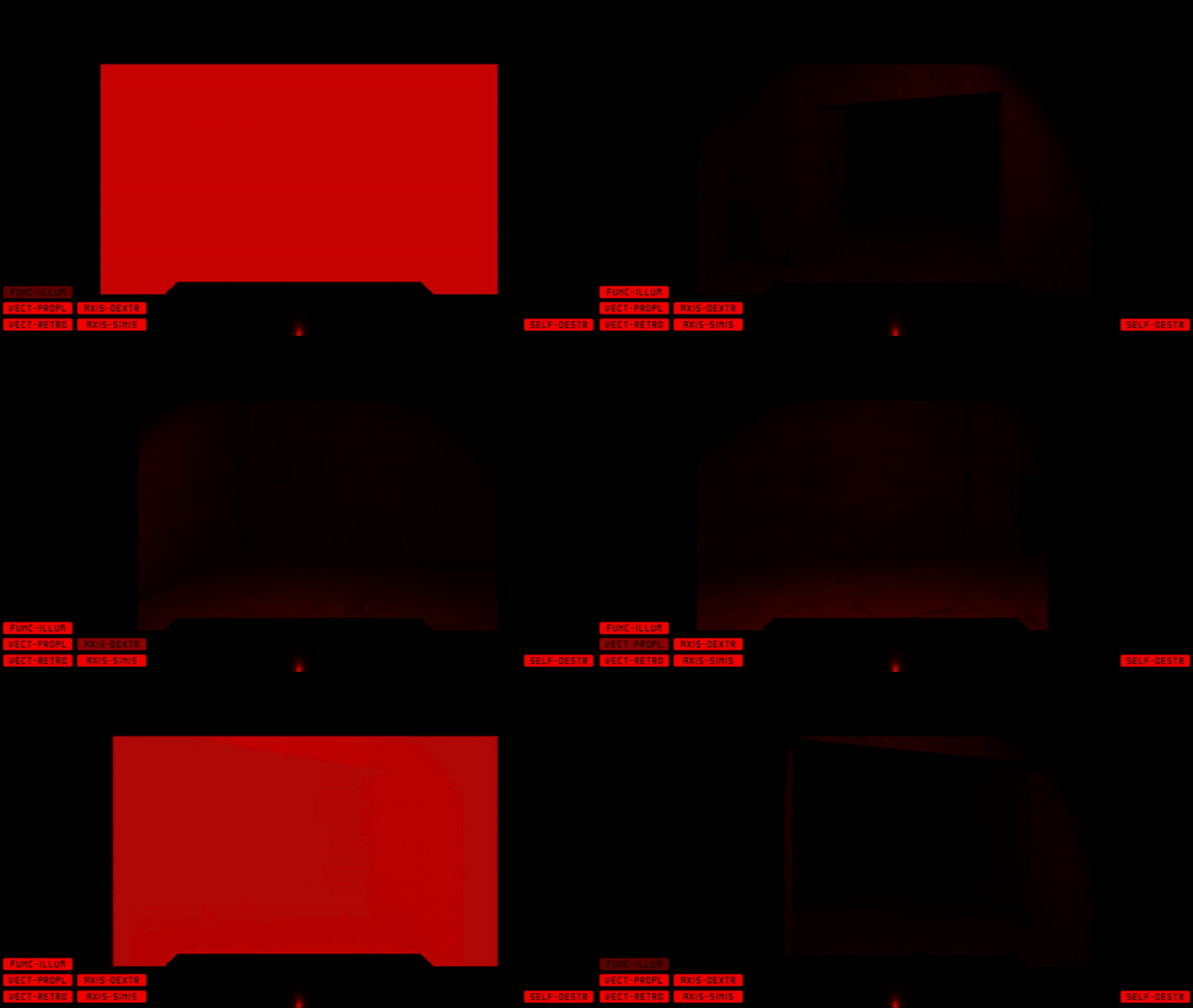
For an early foray into 3d development, I made an experimental game for a check-in assignment in my 3rd term. The game is an odd duck, relying exclusively on intentionally clunky on-screen buttons for every action. Investigating a large, dangerous labyrinth is the name of the game– and you'll have to grapple with an intentionally hostile UI design to manage it.
I started off by considering the basis of my design, the central mechanic. I usually use the "toybox design" process; I ideate a "toy" or central mechanic, make sure that it's inherently fun or interesting to interact with, and then build a "box" around the toy that lets you use the mechanic as frequently and interestingly as possible. It usually results in inherently fun games in my experience: if the absolute basics of the game are fun, it's considerably easier to make enjoyable experiences.
In RED_ROOM, the basic bread-and-butter mechanic are the UI buttons and their functions: from movement to light, everything is found here. This mechanic idea came from one of my favorite thinking points: intentionally clunky mechanics as a source of horror. Horror games like Resident Evil or Silent Hill often have idiosyncrasies not found in other genres; characters run at frustratingly slow paces, or turn using tank controls, or have outright adversarial relationships with combat. Things like this would kill an action or adventure game; a player's power fantasy would be broken if it was irritating on a baseline level to fight their enemies or explore the surrounding area.
However, in horror games, a designer is looking to elicit the complete opposite of power fantasy in their players. They're actually looking to make a player feel vulnerable and weak: to do this, a time-honored strategy is to make the combat or movement inconsistent or underpowered compared to the threats the player will face. The inherent struggle of interacting with the game's systems, rather than just being solely frustrating, helps transport the player directly into their character's shoes. James Sunderland of Silent Hill 2 is not a fighter– he is a confused and scared man with a weak plank of wood, and the game makes you feel as confused as scared as he is while desperately scrambling for advantage. Leon Kennedy in Resident Evil 2 is merely a rookie police officer– his aim is inconsistent and his running speed barely enough to outpace the most lethal threats in Racoon City's police station. Mechanics inform emotions in fascinating ways, and controls become a deeply interesting balancing act of frustration and accessibility.
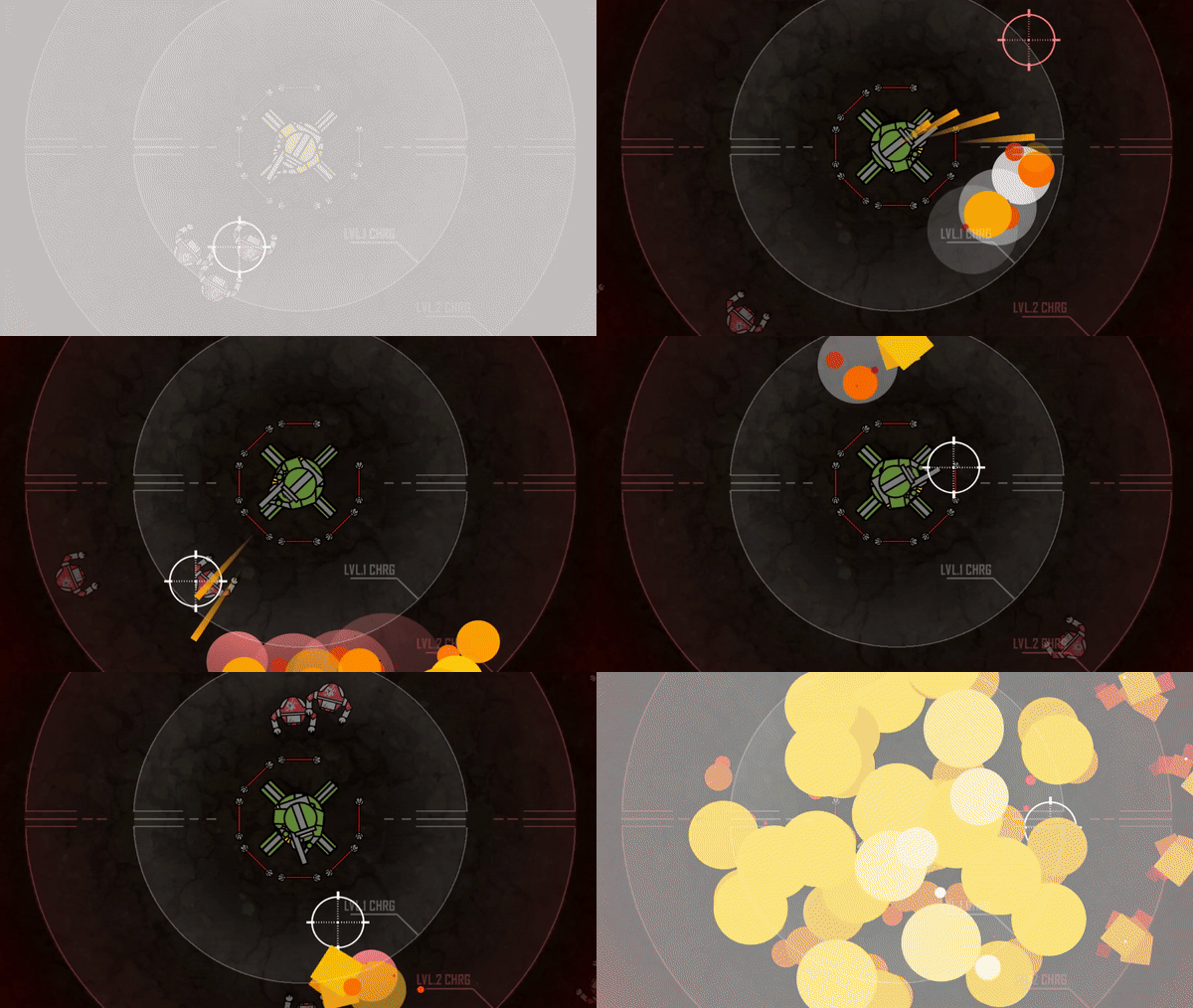
Keeping that all in mind, I decided to push it and take inspiration from this idea of purposefully clunky controls. In making RED_ROOM, I thought of a tank-treaded drone exploring a forgotten temple, like a Mars rover investigating a labyrinth. All of the controls are separated entirely from the keyboard and placed onto the screen, movement is slow and committal, and your only source of light is a rapidly decaying camera-style flash. After that, I considered the "box" part of my design– the toy was already solid, I just needed an environment for it to exist in. I decided to drop the drone into a thick, confusing maze. This, coupled with the limited ability to see where you were, made for an already hostile environment where it felt like things were being actively withheld from you. After creating a few hazardless rooms as a sort of tutorial, I upped the ante with a series of long, dangerous bridges, to test the player's newfound understanding of movement. Finally, I capped everything off with a menacing hallway to a final alarming set-piece.
The game is not quite complete yet. For my future ideas, I plan on updating the "box" around the "toy" to include puzzles, enemies, and further abilities for your drone. Players will have the unique task of selecting the correct option to respond to a dangerous situation, thumbing through an increasingly thorny UI to find the right button. This may end up more of an avant-garde experiment than anything mainstream, but this topic interests me far too much to leave alone. Balancing between frustration and convenience is not an easy task, and perhaps impossible to predict on a player-by-player basis, but I welcome the challenge and relish finding answers.